
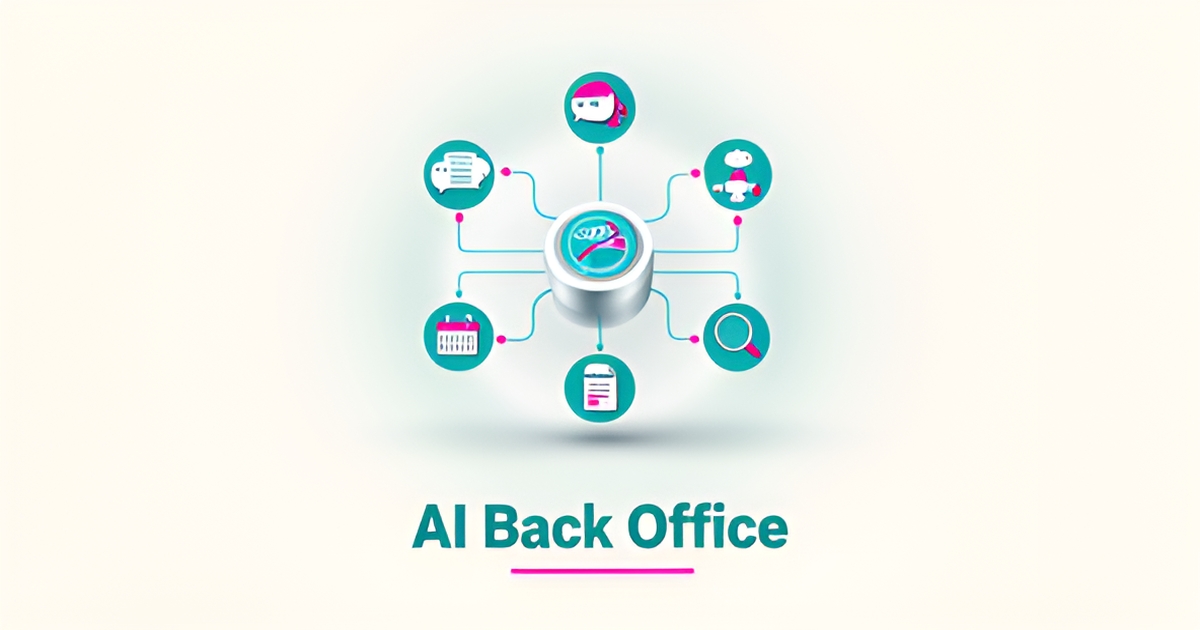
Key facts
- Nearly 60% of U.S. small businesses now use AI in operations, more than double the 2023 rate.
- Only 12% of business owners fully integrate AI into core operations, with lack of technical expertise a leading barrier.
- Nine in ten SMBs using AI report more efficient operations, per a survey of 3,350+ SMB leaders.
- Entrepreneurs spend roughly 36% of their work week — about 15 hours — on admin tasks, research shows.
- Automated back-office functions typically deliver 30–50% reductions in processing costs, industry benchmarks find.
- Businesses using AI-powered support reclaim 10–12 hours per week previously lost to admin work, according to research.
- 53% of small businesses now use AI chatbots and virtual assistants for customer service, per the U.S. Small Business Administration.
WANT RESULTS LIKE THIS?
Imagine a system doing all of this for your local business — every day, without you.
We build local businesses a custom website with a team of AI behind it: every lead captured and followed up, new content published monthly,customers finding you on Google — live in 7 days.
- 85+ pages at launch
- Every lead followed up, automatically
- Your whole business on one screen
The AI Implementation Gap: Why Most Owners Want AI but Never Get It Working
You already know you want AI. Your competitors know it too — almost 60% of U.S. small businesses now use AI in their operations, more than double the 2023 rate, according to the U.S. Chamber of Commerce. Wanting AI was never the hard part.
Here's the part most vendor content skips: interest and implementation are two very different things. A Goldman Sachs analysis found that only 12% of business owners fully integrate AI into their core operations. Meanwhile, roughly half cite the same two blockers: a lack of technical expertise and difficulty choosing among the tools in the first place.
So the real problem isn't a shortage of AI ambition. It's that between "I want a chatbot, a CRM, and automated follow-up" and "here's my working system" stands a technical project — hosting, integrations, prompt configuration, data connections, training the AI on your actual business. For an owner who quotes jobs and answers calls for a living, that project never makes it to the top of the list. It's not a Tuesday; it's a second job.
The cost of leaving it undone is measurable. Research shows entrepreneurs spend roughly 36% of their work week — about 15 hours — on administrative tasks, and businesses that do implement AI back-office systems typically reclaim 10–12 hours per week. That's the admin load a working AI back office absorbs: lead capture, follow-up, content, scheduling, invoicing, reporting.
What usually happens instead is the half-version of adoption. Owners subscribe to a chatbot here, a scheduling tool there, maybe a content generator — and end up with six disconnected subscriptions duct-taped together, each with its own learning curve and its own monthly bill. Salesforce's survey of over 3,350 SMB leaders found 75% are investing in AI, but the tools themselves keep multiplying faster than anyone's ability to manage them.
The barriers owners report are consistent across surveys:
- Lack of technical expertise to set tools up and connect them
- Difficulty choosing which tools deserve the money in the first place
- Security concerns about handing business data to unfamiliar platforms
- Hidden costs from stacking subscriptions and integrations
- Complexity overload — too many dashboards, too little time
This is exactly the gap a done-for-you model exists to close. Instead of handing you another piece of software to learn, AI Business Sites builds and runs the entire back office for you — the chatbot, the CRM, the content engine, the automations — configured to your business and managed by a team, not left as homework for the owner. The distinction matters: the barrier was never your willingness to adopt AI; it was the project standing in the way. Remove the project, and the adoption finally happens.
What a Done-For-You AI Back Office Actually Does
Most small business owners don't lack interest in AI — they lack the time and technical patience to build it. Only 12% of business owners fully integrate AI into core operations, and roughly half point to lack of technical expertise as the reason. A done-for-you AI back office exists to close exactly that gap.
The functions it covers are the ones SMBs already trust. Consider what the research shows about where adoption has actually happened:
- 24/7 answering — 53% of small businesses now use AI-powered chatbots and virtual assistants for customer service, per the U.S. Small Business Administration. A done-for-you back office includes both a website chatbot and a voice agent visitors can talk to in their browser.
- A CRM with automatic follow-up — every lead from forms, chat, or voice lands in one pipeline and gets an instant branded response, so nothing sits unanswered overnight.
- A 12-agent content engine — producing 14+ keyword-targeted SEO pieces every month, from blogs to service and location pages, without the owner writing a word.
- An SEO Growth Engine — tracking Google and Bing rankings, plus AI-citation visibility, and filing a weekly growth report in the owner's inbox.
- The jobs/quote/invoice loop — AI drafts the quote, the customer approves online, the job hits the calendar, the invoice collects payment, and the review request goes out.
That last piece matters more than it looks. Research on SMB financial operations shows 46% of owners already trust AI with billing and payments automation — the quote-to-invoice loop isn't experimental technology, it's a use case the market has vetted.
What makes this genuinely "done for you" is the division of labor. AI Business Sites sets up the chatbot, trains it on the business's own documents, configures the CRM and automations, and runs the content and SEO engines month after month. The owner's job isn't to learn software — it's to talk to the system: ask for a quote on yesterday's call, check which invoices are unpaid, or request a change. Every function has a conversational entry point, and the dashboard exists for review, not homework.
The result maps to what the research already measures: nine in ten SMBs using AI report more efficient operations, and entrepreneurs typically spend around 15 hours a week on admin — hours a managed back office is built to reclaim. The owner keeps the trade; the system runs the office.
The Outcomes: Time Reclaimed, Costs Down, Follow-Up That Never Slips
So what does all this actually add up to? The numbers from industry research are striking: a global survey of SMB leaders found that nine in ten businesses using AI report more efficient operations, and 85% expect a return on their investment.
The cost side is just as compelling. Organizations that automate back-office functions typically see 30–50% reductions in processing costs, and business owners working with AI-powered support report reclaiming 10–12 hours per week — time that was previously eaten by admin work. For an owner spending roughly 15 hours a week on back-office tasks, that's most of the burden gone.
Those outcomes map directly onto how a done-for-you system like AI Business Sites works day to day:
- Instant lead response. Most callers don't leave voicemail — they call the next business on Google. Chat and voice agents on the website answer immediately, capture the details, and drop the lead into the CRM within seconds.
- Content that compounds. The content engine publishes 14+ new SEO pieces every month, plus daily industry news — the kind of consistent output that builds search visibility over time instead of stalling after launch.
- Invoices that follow up themselves. Invoices go out with a pay page and automated day-3, day-7, and day-14 reminders, so overdue accounts get chased without anyone awkwardly picking up the phone.
- Proof the work happened. A weekly growth report lands in the owner's inbox with rank movements, traffic, and the actions the system took — no guessing whether the AI is actually doing anything.
This matters because the gap in the market isn't interest — it's implementation. Research shows only 12% of business owners fully integrate AI into core operations, with lack of technical expertise cited as a leading barrier. The efficiency gains above only materialize when someone actually builds, connects, and maintains the system.
That's the distinction between owning software and having a team. The outcomes — faster follow-up, lower processing costs, hours returned each week — come from mechanics running every day without the owner touching them. The 9-in-10 efficiency figure isn't a promise about any one product; it's what the research says happens when AI is genuinely put to work in a small business rather than left sitting in a browser tab.
Local business: doing this the old way?
One system replaces the whole pile.
All of it — the website, the follow-up, the content, the leads — built and run for you for $1,497 + $497/mo. Month-to-month, and you own everything.
See what your build includesTrust, Oversight, and Ownership: How You Stay in Control
Handing your back office to AI sounds convenient — until you picture a chatbot emailing your customers at midnight without you knowing. That fear isn't irrational. According to Salesforce's survey of 3,350+ SMB leaders, security is the single biggest concern small businesses have about AI, and owners overwhelmingly manage that risk through two habits: keeping a human in the loop and working with platforms they trust.
That's exactly how the Renovatly Growth back office is built. Every customer-facing action — a drafted email, a review reply, a blog post, a quote — lands in a review queue before it goes anywhere. The default setting is Approve First: nothing speaks for your business until you've seen it. You can loosen the reins later with confidence thresholds, or tighten them back whenever you like.
And when you reject a draft, the system learns from it. Rejection feedback makes the next draft better, so the AI converges on your voice instead of a generic one. You're not babysitting software — you're training an employee who never gets tired of the feedback.
The second half of the trust equation is ownership. Too many platforms quietly own your business's digital assets — your content lives in their system, your customer data sits in their database, and leaving means starting over. AI Business Sites takes the opposite position:
- You own the code, the content, your lead data, and your knowledgebase documents
- Your domain is registered in your name, and your Search Console accounts are yours
- Money flows through your own Stripe account — the platform never touches your funds
- Leave anytime: full code pushed to a GitHub repo in your name, plus a complete database export
The payments point deserves emphasis. When a customer pays an invoice or places an order, that money goes straight to your Stripe account. You own the revenue relationship too — not a reseller arrangement, not a platform taking a cut.
There's no long-term contract, either. The arrangement is month-to-month, cancel with 30 days' notice, and you walk away with everything. The site is built on standard React/Next.js — the same open-source technology any developer can pick up — so you're never trapped by proprietary tools.
This is the philosophy behind the company's approach: "Cancel with 30 days' notice. Leave with everything. We keep you by doing the work." It's a deliberate inversion of the usual SaaS playbook. Most providers lock you in with contracts and data hostage-taking. Here, the only thing keeping you is results — content published every month, leads followed up, systems maintained and improved.
That's the honest way to earn trust. A recent industry analysis put it well: trust "isn't given — it's earned through education, safe systems, and the proper guardrails." Human oversight by default, full asset ownership, and an exit door that stays open — those are the guardrails.
Getting Started: From Kickoff to a Working AI Team in 7 Days
Most small business owners don't avoid AI because they doubt it works — they avoid it because they don't have time to become a technical project manager. That gap is real: only about 12% of business owners fully integrate AI into core operations, with roughly half citing lack of technical expertise as the barrier, according to industry research. A done-for-you implementation path is designed to close that gap, and here's what the process actually looks like.
It starts with a short kickoff questionnaire about your business, your services, and your customers. That's the entire homework. Once it's in, the build begins — and within 7 days, a custom website with 85+ pages goes live with chat, a voice agent visitors can talk to in their browser, a booking calendar, and a CRM capturing every lead from day one. You approve the build before it launches, so you see the work before the monthly billing starts.
Training and handover come next, and this is where the model differs from traditional software. Instead of learning dashboards and menus, you run everything through conversation — typing or talking to the AI assistant. Ask "what's on today?" or "which invoices are unpaid?" and it answers. The interface is the conversation; the screens are just there for review. For owners already stretched thin — entrepreneurs spend roughly 36% of their work week, about 15 hours, on admin tasks — that's the difference between adopting AI and actually using it.
From there, ongoing monthly management takes over. The team behind the system publishes content, keeps the site maintained, monitors the automations, and keeps improving the setup. Your job is to run the business; the system runs the rest. That matters because the research shows implementation is where most AI efforts stall — while surveys of SMB leaders find that nine in ten businesses using AI report more efficient operations, getting to that state requires someone to build, connect, and babysit the whole stack.
The best way to find out whether this fits your business is a conversation. Book a free 30-minute strategy call — no obligation, no sales pitch — to talk through your website, your goals, and whether a done-for-you AI back office makes sense for you. If you already know you want in, you can start with a deposit and reserve your build slot right away. Month-to-month terms, cancel anytime with 30 days' notice, and you own everything — code, content, and data — if you ever leave.
Frequently Asked Questions
Why do most small business owners never actually get AI working?
What does a done-for-you AI back office actually include?
How much time and money can an AI back office actually save?
How do I stay in control if AI is emailing my customers and replying to reviews?
Do I own my website, content, and customer data if I leave?
How long does it take to get up and running?
The Gap Isn't Ambition — It's a Team
The story the research tells is consistent: nearly 60% of small businesses now use AI, nine in ten report more efficient operations, yet only about 12% ever get it fully working in their business. The difference between those groups isn't desire — it's whether someone actually builds, connects, and maintains the system. That's the entire premise behind the done-for-you model at AI Business Sites: the chatbot, CRM, content engine, quote-to-invoice loop, and automations are set up for you and managed month after month, so the adoption gap never becomes your homework. You stay in control with Approve First oversight, you own the code, content, and data, and you can leave anytime with everything. If you've been carrying 15 hours of admin a week and know AI could take most of it off your plate, the next step is simple: book a free 30-minute strategy call — no obligation, no pitch — and talk through whether a working AI back office makes sense for your business. Or if you're ready now, start with a deposit and reserve your build slot. Live in 7 days, month-to-month, and yours to keep.
FOR local businesss — BUILT AND RUN BY US
Your website. Your content. Your leads. Your data.
$500 starts your build. Seven days later it's live — chat, booking, follow-up, and your Google presence all set up. Then we run it, every month. You do the work you actually get paid for.