
TL;DR
Trades and service businesses are quietly paying a premium for features like review requests, e-signature, and pipelines that field-service software gates behind add-ons — and an all-inclusive flat-rate model is starting to challenge that norm.
Key points
- 01Field-service platforms like Jobber, Housecall Pro, and ServiceTitan commonly charge per seat and gate features such as review requests, e-signature, and pipelines behind paid add-ons.
- 02The core operational loop of a service business — quote, job, schedule, invoice, payment, review — is increasingly being bundled into all-inclusive platforms rather than sold piecemeal.
- 03AI-drafted quotes generated directly from call transcripts are emerging as a differentiator: the conversation becomes the quote without manual data entry.
- 04Small business owners also face the 'missed-call economy,' where callers who reach voicemail simply move on to the next listing.
- 05Ownership matters: businesses are increasingly favoring platforms where code, content, data, and even the payment relationship (via their own Stripe account) belong to them.
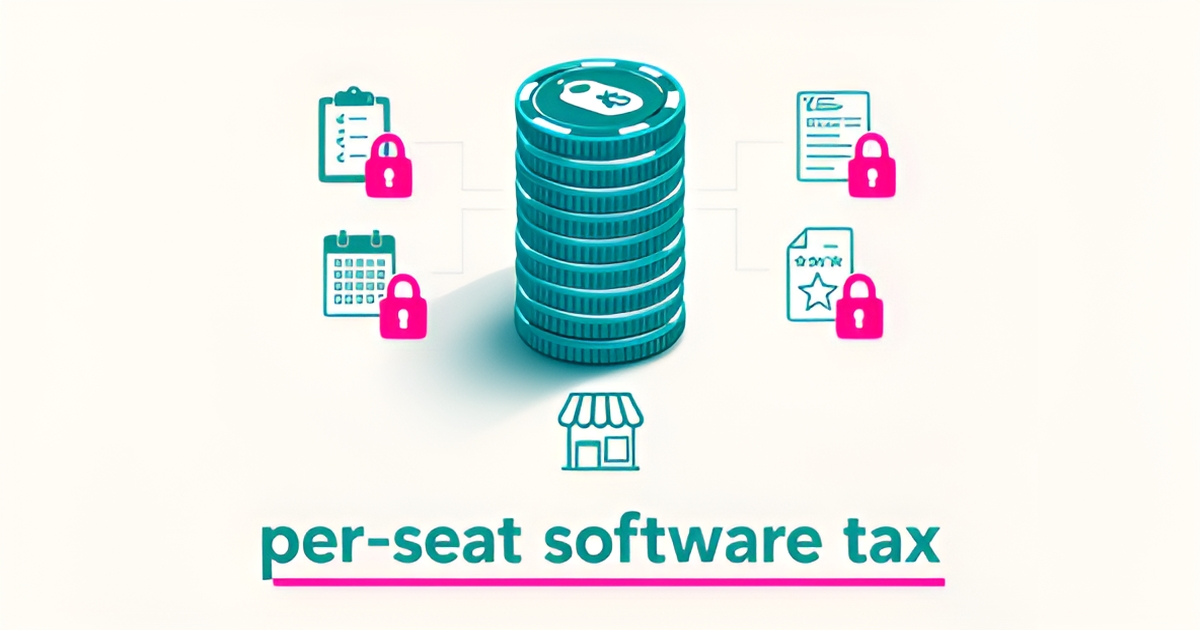
If you run a plumbing company, an HVAC business, or a cleaning service, you have probably noticed something odd about your software bill. You pay a monthly subscription. Then you pay per seat for each technician. Then you discover that the review-request feature — the one that politely asks happy customers to leave a Google review — is an add-on. So is e-signature. So, sometimes, is the pipeline view that helps you track jobs from bid to invoice. It is a strange arrangement: the software company knows exactly which parts of your daily workflow you cannot live without, and it prices each of them separately. Industry observers have started calling this the per-seat software tax, and for small service businesses, it adds up fast.
How the Add-On Model Became the Default
The All-Inclusive Counter-Trend
The Quote That Writes Itself
The Missed-Call Economy
Ownership: The Exit Clause That Should Be Standard
Conclusion
None of this means the established field-service platforms are bad products — many are excellent at dispatching, scheduling, and invoicing. But the pricing architecture they popularized was built for a market that tolerated add-ons, and that tolerance is wearing thin as AI-driven systems make full-stack delivery cheaper to provide. For a service business owner evaluating software in 2026, the questions worth asking are simple: Does the price change when I hire a sixth technician? Do I pay extra to request reviews, collect signatures, and track pipelines? And if I leave, do I walk away with everything — or just a cancellation email? The platforms that answer those questions well are the ones worth building on.