
TL;DR
The agentic AI market has split into horizontal tools like ChatGPT Work that amplify technical operators and vertical business operating systems that run operations for you — and for a service business, the difference decides whether AI actually pays off.
Key points
- 01The agentic AI market in 2026 has bifurcated into horizontal work tools (ChatGPT Work, Claude Cowork) and vertical business operating systems that run operations end-to-end.
- 02ChatGPT Work's September upgrades — browser automation, voice control, scheduled tasks — still require a skilled operator who architects prompts, monitors capacity, and manages security.
- 03Salesforce's 2026 survey shows AI agent adoption in service organizations jumped from 39% to 66% year over year, with 70% of adopters seeing value within 60 days.
- 04Trust is the new battleground: 40% of U.S. consumers trust retailer emails less when they know AI wrote them, making human-in-the-loop governance essential.
- 05For local service businesses, the winning approach is a done-for-you system that owns outcomes — leads captured, quotes approved, invoices paid — not another tool to learn.
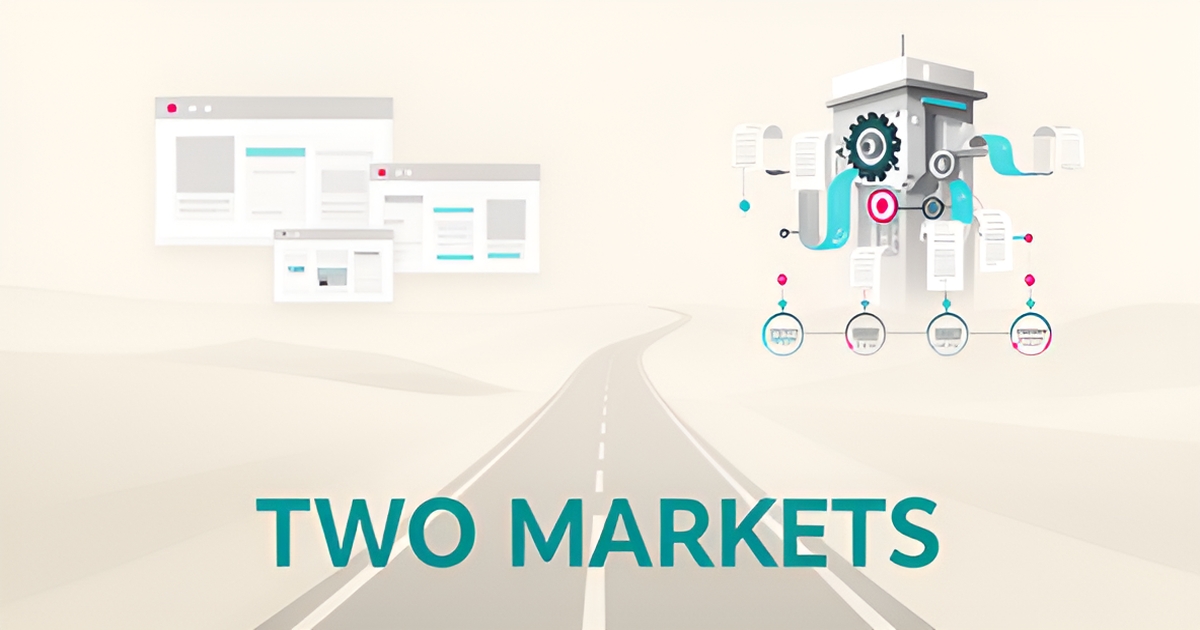
If you've followed AI news this fall, you've watched ChatGPT Work grow into something remarkable. In September alone, OpenAI added browser automation on authenticated sites, real-time voice control, and scheduled webhook-triggered tasks, alongside new GPT-6 models rolling out across paid tiers. It's genuinely impressive — and for many small business owners, it's also completely beside the point. That's because the agentic AI market has quietly split into two distinct categories, and knowing which one you're shopping in is the single most important AI decision a service business will make this year.
Layer 2: Powerful Tools That Still Need a Driver
Layer 3: Systems That Own Outcomes, Not Outputs
The Trust Problem Nobody's Pricing In
What This Means for a Local Service Business
How to Evaluate Which Layer You're Buying
Conclusion
The agentic AI market's split into horizontal tools and vertical operating systems isn't a temporary phase — it's the permanent structure of the industry. Raw intelligence is commoditizing fast, and differentiation has moved up the stack to who runs the system and who owns the outcomes. If you're a technical operator who enjoys architecting AI workflows, Layer 2 tools are genuinely excellent and getting better monthly. But if you run a service business and your competitive advantage is your trade — not your prompt engineering — the decision is simpler than the marketing makes it seem. Don't buy a more powerful tool. Hire a system that answers the phone at 7 PM, drafts the quote, books the job, collects the payment, and asks for the review — while you approve the drafts from your truck. That's what a done-for-you AI business operating system is for: a custom website live in 7 days with 85+ pages, an AI back office running the follow-up, and everything owned by you. If that sounds like the Tuesday you'd rather have, it starts with a build.