
Key facts
- 70% of global internet traffic comes from smartphones in 2026 according to small business website research
- 53% of users abandon sites loading longer than three seconds per small business design research
- DIY small business websites start around $500 while custom builds run $5,000+ per industry cost breakdowns
- Google replaced First Input Delay with Interaction to Next Paint in March 2024 as an SEO speed metric
- About 16% of people worldwide live with a disability per World Health Organization data
- Simple sites can launch in under a week while complex builds take 2–3 months according to project timelines
WANT RESULTS LIKE THIS?
Imagine a system doing all of this for your local business — every day, without you.
We build local businesses a custom website with a team of AI behind it: every lead captured and followed up, new content published monthly,customers finding you on Google — live in 7 days.
- 85+ pages at launch
- Every lead followed up, automatically
- Your whole business on one screen
Why Most Websites Fail Before They Start
Every year, thousands of small business owners launch websites that quietly fail. The site goes live, sits there doing nothing, and the owner concludes that "websites don't work for my industry." In reality, the site was never built to work as anything more than a digital brochure.
The numbers explain why. According to small business website research, 53% of users abandon a website if it takes longer than three seconds to load. Meanwhile, 70% of global internet traffic now comes from smartphones — which means a site that isn't fast and mobile-first is turning away most of its visitors before they read a single word.
The problem runs deeper than design. A website that actually generates business has to handle a stack of moving parts, and most DIY approaches only cover the first one:
- Hosting, maintenance, and security — the technical foundation nobody sees until it breaks
- Technical SEO, including clean URLs, keyword integration, and schema markup that Google rewards
- Content that gets written, updated, and expanded month after month
- Lead capture and follow-up, so a visitor becomes a contact instead of a bounce
Research on common website pitfalls highlights exactly where owners stumble: prioritizing aesthetics over functionality, neglecting technical SEO, and failing to update plugins or content over time. These aren't beginner mistakes — they're maintenance realities that pile up on top of running an actual business.
There's also a cost trap. DIY builders start around $500, while custom builds run $5,000 or more, according to industry cost breakdowns. The cheaper option saves money upfront but leaves the owner doing every technical task themselves. As the saying goes, free is only free if your time is.
And the goalposts keep moving. Google announced in March 2024 that it would replace First Input Delay with Interaction to Next Paint as a speed metric for SEO rankings — one more technical standard the average owner has never heard of and shouldn't have to track.
This is the gap that shapes how we think about websites at AI Business Sites. A website isn't a one-time project; it's a system that needs building, connecting, and running. That's why the seven steps that follow aren't just a checklist for launch day — they're a framework for everything a site must keep doing after it goes live.
The good news: none of these challenges require the owner to become a part-time web developer. They just require a process — and knowing what each step is for.
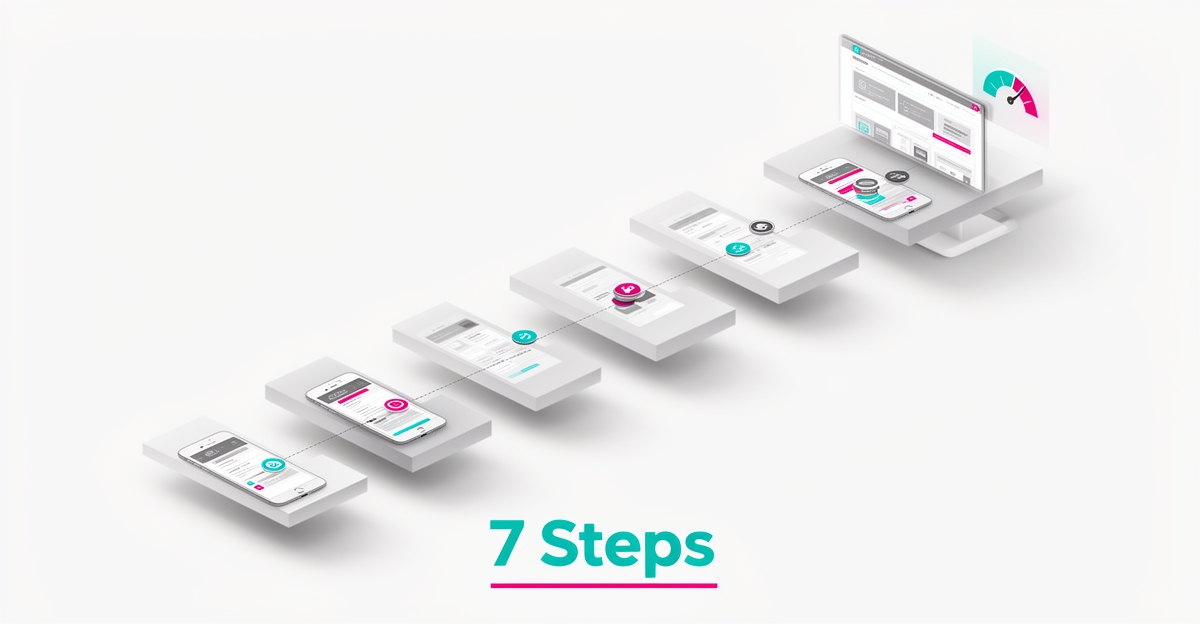
The 7 Steps to Creating a Website That Works
Building a website without a plan is how businesses end up with a pretty brochure that never brings in a lead. A working website follows a process — seven steps that take you from idea to a site that answers questions, captures contacts, and keeps improving after launch.
1. Define your goals and audience. Before choosing colors or templates, get clear on what the site must do: position your business as the solution to a problem, show you're qualified, and give visitors a reason to act. Experts note that a successful website communicates your offer, demonstrates expertise, and converts leads into revenue. Skipping this step is the most common reason sites underperform.
2. Choose the right platform or partner. The choice should align with your business goals. DIY builders offer speed and low cost — small business websites range from around $500 for DIY options to $5,000+ for custom builds — while custom builds offer flexibility and performance. If you'd rather not run a technical project yourself, a done-for-you service like AI Business Sites builds and manages the entire presence for you, including setup training and ongoing support.
3. Design for mobile-first and speed. This is non-negotiable. Roughly 70% of global internet traffic now comes from smartphones, and 53% of users abandon a site that takes longer than three seconds to load. Prioritize clean layouts, fast load times, and accessibility — about 16% of people worldwide live with a disability, per the World Health Organization.
4. Build with SEO and schema from day one. Technical SEO — clean URLs, keyword integration, and schema markup — needs to be baked in at launch, not bolted on later. Google also updates how it measures speed: in March 2024, it replaced First Input Delay with Interaction to Next Paint as a ranking metric, so performance matters for search visibility too.
5. Create content that converts. Every page should answer a question or prompt action, backed by trust signals like testimonials and security badges that influence purchasing decisions. Consistency matters more than volume — content that never gets written is a leading reason small business sites stall.
6. Test, launch, and optimize. Before going live, test functionality, load times, and mobile behavior. Timelines vary widely — simple sites can launch in under a week, while complex builds take two to three months. Launch is the starting line, not the finish.
7. Maintain and update consistently. Websites decay without care. Regular updates, fresh content, and ongoing technical SEO sustain visibility and performance — neglecting these is one of the most cited pitfalls in small business web design. Managed services like AI Business Sites handle this ongoing work, publishing new content and keeping systems monitored so the site keeps earning its keep.
If you'd rather talk through what your site actually needs, book a free 30-minute strategy call — no obligation, no sales pitch, just a real conversation.
Local business: doing this the old way?
One system replaces the whole pile.
All of it — the website, the follow-up, the content, the leads — built and run for you for $1,497 + $497/mo. Month-to-month, and you own everything.
See what your build includesThe DIY Trap vs. The Done-For-You Advantage
You can build a website yourself, and plenty of owners do. The question is what that “free” build actually costs when time, skill and upkeep are counted.
The DIY path usually starts with a builder like Wix or Squarespace, or a freelancer bid. Small business website costs range from $500 for DIY builders to $5,000+ for custom builds according to industry pricing guidance, and project timelines vary from under a week for simple sites to 2–3 months for complex, feature-rich designs. That speed and affordability is real, but it comes with hidden work.
With DIY you own the learning curve. You pick the template, write the copy, add schema markup, set up Google Business Profile, and then keep the site fast and current. Website speed is critical, as research on small business design notes, with 53% of users abandon sites that take longer than three seconds to load. Mobile-first design is non-negotiable, with 70% of global internet traffic now coming from smartphones in 2026.
Ongoing maintenance is where the trap widens. Regular updates, technical SEO, plugin care and content refreshes are necessary to sustain visibility and performance. Common pitfalls include prioritizing aesthetics over functionality, neglecting technical SEO, and failing to update plugins or content.
A done-for-you model flips the equation. Instead of assembling tools, you get a managed system built and run for you. AI Business Sites delivers a custom-built site with 85+ pages live in 7 days from kickoff, includes hosting, content, CRM and ongoing management for one monthly fee, and provides training and handover so the owner can run the business, not the website.
The contrast shows up in day-to-day ownership:
- Time: DIY requires hours for setup, troubleshooting and monthly content; done-for-you publishes 14+ new SEO pieces per month and handles maintenance.
- Technical skill: Builders demand design and SEO decisions; a managed build handles schema markup, internal linking and Google setup at launch.
- Ongoing cost: DIY looks cheap until subscriptions, freelancers and lost leads from slow or stale sites add up.
You can build it yourself, but should you? If the goal is a brochure you tinker with, DIY works. If the goal is a system that answers, writes, sells and remembers the business, the done-for-you advantage is fewer tools, faster launch and someone responsible for keeping it working.
What Happens After Launch: Training, Support, and Ownership
After launch, the journey doesn’t end—it evolves. Many business owners assume a website is complete once it goes live, but the real work begins after the homepage is public. AI Business Sites treats post-launch as a critical phase, not an afterthought. Within days of going live, clients receive a full walkthrough of the dashboard and AI assistant, showing how to monitor leads, approve content, and manage the system through simple conversation—no technical training required. This handover ensures owners feel confident using the platform from day one, even if they’ve never managed a website before.
Ongoing support is built into the $497/month managed service, which includes hosting, maintenance, and continuous system improvements. Unlike DIY platforms where updates and security patches fall on the owner, AI Business Sites handles all backend operations—keeping the site fast, secure, and running smoothly. Research shows that 53% of users abandon websites that take longer than three seconds to load, making consistent performance essential for retaining visitors and capturing leads. The platform’s infrastructure is optimized for speed and reliability, with regular updates applied automatically so the business owner never has to worry about technical upkeep.
Ownership is complete and permanent. Clients retain full control of their code, content, data, and domain—registered in their name, not the provider’s. If they choose to cancel, AI Business Sites exports the entire website to a GitHub repo in their name and provides a full database export, built on standard React/Next.js technology any developer can maintain. There are no long-term contracts—just month-to-month flexibility with 30 days’ notice to cancel. This approach reinforces the idea that a website isn’t a one-time project but an evolving system that thrives with consistent content, optimization, and support—all of which AI Business Sites manages as part of the service.
Frequently Asked Questions
What are the 7 steps to creating a website that actually works for a small business?
Why do most small business websites fail to generate leads after launch?
How important is mobile-first design and website speed for user retention?
What technical SEO elements should be included when building a website?
Is it better to build a website yourself or use a done-for-you service like AI Business Sites?
What happens after a website launches with AI Business Sites?
Your Website Should Work While You Work
The truth is, most small business websites fail not because they look bad, but because they were never built to work as a system. From defining clear goals and choosing the right platform to designing for mobile speed, baking in SEO from day one, creating converting content, testing before launch, and committing to ongoing maintenance — each of the seven steps ensures your site doesn’t just sit there, but actively answers questions, captures leads, and supports your business long after it goes live. The real advantage comes when you remove the technical burden entirely: with a done-for-you solution like AI Business Sites, you get a custom-built, AI-powered presence that includes hosting, content, CRM, lead capture, and ongoing updates — all managed for you, so you can focus on running your business, not maintaining a website. If you're ready to stop wrestling with plugins and start seeing real results from your online presence, book a free 30-minute strategy call to discuss what your site actually needs — no obligation, just a real conversation about what works.
FOR local businesss — BUILT AND RUN BY US
Your website. Your content. Your leads. Your data.
$500 starts your build. Seven days later it's live — chat, booking, follow-up, and your Google presence all set up. Then we run it, every month. You do the work you actually get paid for.