
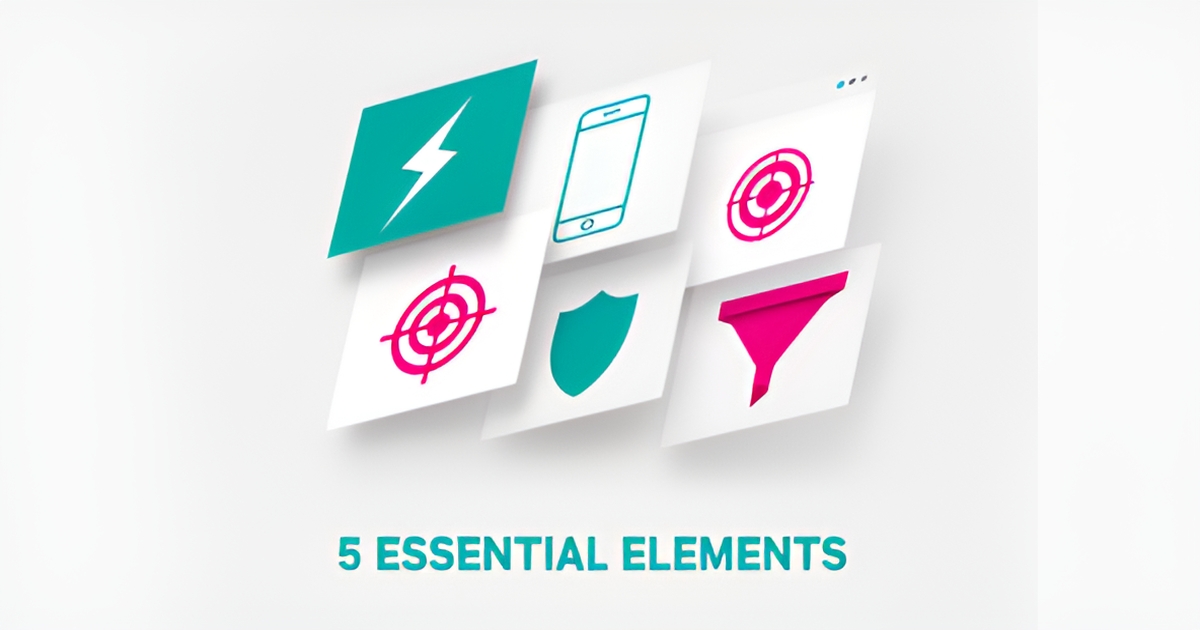
Key facts
- 53% of users abandon a website if it takes longer than three seconds to load according to industry research
- Over 60% of searches now come from mobile devices making mobile-first design non-negotiable
- Secure websites gain 80% more trust when SSL, clear privacy policies, and testimonials are implemented research shows
- Real testimonials from named customers carry 10x the weight of generic praise according to a practical checklist
- Every additional form field reduces completions by approximately 10% making minimal forms critical
- Organizations with powerful About sections establish trust 2x faster consumer surveys indicate
- Users should never need more than three clicks to reach desired information for optimal navigation
WANT RESULTS LIKE THIS?
Imagine a system doing all of this for your local business — every day, without you.
We build local businesses a custom website with a team of AI behind it: every lead captured and followed up, new content published monthly,customers finding you on Google — live in 7 days.
- 85+ pages at launch
- Every lead followed up, automatically
- Your whole business on one screen
Why Most Business Websites Fail to Convert
Most business websites look finished and quietly lose leads every day. They are built as brochures instead of conversion systems, and the friction shows up in speed, mobile experience, and clarity.
Speed is the first filter. Industry research shows 53% of users abandon a website if it takes longer than three seconds to load. Visitors also abandon sites that take over three seconds to load, and a half-second delay can mean lost sales. When a site is slow, the rest of the design never gets a chance to work.
Mobile friction compounds the problem. Over 60% of searches now come from mobile devices, and over 60% of traffic comes from mobile devices. Google prioritizes mobile-first indexing, so a desktop-first layout creates bounce before the message lands. Mobile optimization is non-negotiable.
Clarity above the fold decides whether a visitor stays. A clear value proposition must be communicated within the top third of the homepage to immediately engage visitors and reduce bounce rates. A practical checklist puts it plainly: your homepage has one job — tell visitors what you do and how to work with you. Place this information above the fold with business name, clear value proposition, and one primary call-to-action.
Brochure sites also fail on structure and access. Users should never need more than three clicks to reach desired information, yet many menus hide services and contact points. Contact information should be visible within three seconds of landing, with phone number in the header on every page. Every additional form field reduces form completions by approximately 10%.
These gaps map to the five recurring themes that define a high-performing site:
- Performance & Speed — sub-three-second loads and compressed images under 200KB
- Mobile & UX — mobile-first design for the 60%+ mobile search reality
- Clarity & Value Proposition — instant understanding above the fold
- Trust & Credibility — SSL, privacy, testimonials and real About storytelling
- Content & Conversion Structure — dedicated service pages and frictionless lead capture
In the Building Your Website > Design & Content category, AI Business Sites breaks down these components and integrates them into a done-for-you system. The approach replaces brochure thinking with a 24/7 revenue engine built for speed, mobile, clarity and conversion from launch.
The 5 Core Elements Research Says You Need
Research doesn't hand out participation trophies. It shows that five themes separate websites that convert from websites that just exist — and every one of them is a non-negotiable threshold, not a nice-to-have.
Performance & Speed is the first gate. Industry research finds that 53% of users abandon a website if it takes longer than three seconds to load, and a half-second delay can mean lost sales. Compressing images to under 200KB per image isn't optimization — it's survival.
Mobile-First UX isn't a buzzword; it's where your traffic lives. Over 60% of searches now come from mobile devices, and Google prioritizes mobile-first indexing. If the experience breaks on a phone, you've already lost the majority of visitors before they read a word.
Clarity & Value Proposition decides whether someone stays or bounces. A clear value proposition must be communicated within the top third of the homepage to immediately engage visitors and reduce bounce rates. The homepage has one job: tell visitors what you do and how to work with you — above the fold, with a single primary call-to-action.
Trust & Credibility compounds every other element. Secure websites gain 80% more trust when SSL, clear privacy policies, and testimonials are implemented. Real testimonials from named customers carry 10x the weight of generic praise, and organizations with powerful About sections establish trust twice as fast.
Content & Conversion Structure turns attention into pipeline. Users should never need more than three clicks to reach desired information. Every service needs its own page acting as a mini-landing page, and every additional form field reduces completions by approximately 10%.
- Sub-three-second load times and image compression under 200KB
- Mobile-first design for the 60%+ of traffic arriving on phones
- Value proposition above the fold with one primary CTA
- SSL, privacy policies, and named-customer testimonials on every core page
- Three-click max navigation, dedicated service pages, and minimal form fields
AI Business Sites bakes these five into every build — 85+ pages live in 7 days on a Next.js stack engineered for speed, mobile-first by default, with schema-rich service pages, trust signals woven throughout, and a conversion structure that funnels every visitor toward a booked job or captured lead.
Local business: doing this the old way?
One system replaces the whole pile.
All of it — the website, the follow-up, the content, the leads — built and run for you for $1,497 + $497/mo. Month-to-month, and you own everything.
See what your build includesHow AI Business Sites Builds These Elements In
Most businesses piece their website together — one tool for speed, another for mobile, a third for SEO, a fourth for trust signals. The result is a stack that fights itself. A unified system handles all five elements at once, so nothing gets lost in translation.
Performance is the baseline. Research shows 53% of users abandon a website if it takes longer than three seconds to load, and over 60% of searches now come from mobile devices. AI Business Sites builds on Next.js and React — the same stack Netflix and Shopify use — delivering sub-three-second loads across an 85+ page mobile-first build at launch. Image compression, code splitting, and edge hosting are configured before the first visitor arrives.
Clarity and trust follow speed. The homepage leads with a clear value proposition above the fold and a single primary CTA, matching the finding that a clear value proposition must be communicated within the top third of the homepage to immediately engage visitors. Trust signals are baked in: SSL, privacy policies, real testimonials from named customers, and an About page that shows the humans behind the business — organizations with powerful About sections establish trust 2x faster, and real testimonials from named customers carry 10x the weight of generic praise.
Content structure turns traffic into leads. Every service gets its own page with schema markup, FAQs, and conversion points — each one acting as a mini-landing page. The SEO engine publishes 14+ new pieces monthly (blogs, service pages, location pages, comparison guides) with internal linking, featured images, and a validation layer that won't publish a price it can't source. Lead capture forms stay short — name, email, message — because every additional field reduces form completions by approximately 10%.
- Next.js/React foundation for speed and mobile-first performance out of the box
- Homepage value prop and CTA above the fold on every device
- Built-in SSL, testimonials, About page, and trust signals on every core page
- Dedicated service pages with schema, FAQs, and conversion points
- Ongoing SEO content engine with comparison pages, featured images, and lead capture
All of it ships in 7 days from kickoff. The client owns the code, content, domain, and data — no long-term contracts, just a month-to-month partnership that earns its keep by doing the work.
From Elements to a Revenue Engine You Own
From Elements to a Revenue Engine You Own
A website only becomes a true revenue engine when its core elements work together to convert visitors into customers. Research shows that 53% of users abandon a site if it takes longer than three seconds to load, making speed the first non-negotiable factor for keeping attention. Over 60% of searches now come from mobile devices, so performance must be optimized for smaller screens first, not as an afterthought.
Clarity determines whether a visitor stays or leaves within seconds. The homepage has one job: tell visitors what you do and how to work with you, placed above the fold with a clear value proposition and primary call-to-action. Every additional form field reduces completions by approximately 10%, so lead capture should be minimal—just name, email, and message—to maximize conversions.
Trust is built through visible security, social proof, and transparency. Secure websites gain 80% more trust when SSL, clear privacy policies, and testimonials are implemented, turning credibility into a conversion multiplier. Real testimonials from named customers carry 10x the weight of generic praise, and organizations with powerful About sections establish trust 2x faster.
Navigation should never require more than three clicks to find desired information, with main menus limited to 5-7 items using clear labels like “Services.” Contact details must be visible within three seconds of landing—displayed in the header and on a dedicated Contact page with phone, email, form, and address.
Each service or product page should act as its own mini-landing page, explaining what the service includes, who it’s for, expected outcomes, pricing or how to get pricing, and next steps. This structure supports long-term organic growth through strategic SEO and evergreen content like blogs and resources.
AI Business Sites integrates these elements by building sites that load fast and perform well on mobile from day one, with 85+ pages live within 7 days. The platform bakes trust into every core page through SSL, privacy policies, and automated testimonial collection. Navigation is kept simple with instant contact access, and every service page is designed as a focused conversion point. Beyond the website, the $497/month managed service includes ongoing content, CRM, jobs/invoicing automation, and full ownership—turning a static site into a revenue engine you control.
Frequently Asked Questions
What are the 5 elements of a website that actually converts?
How fast does my website need to load?
Do I really need a mobile-first website design?
What should go above the fold on my homepage?
How do I build trust on a small business website?
How many form fields should a lead capture form have?
Build a Website That Works While You Do
A high-performing website isn’t a design showcase, it’s a conversion system. Speed, mobile-first UX, clear value above the fold, trust signals, and focused content structure work together to keep visitors from bouncing and turn attention into leads. When those five elements are missing, 53% of users abandon a website if it takes longer than three seconds to load, and the rest of your marketing never gets a chance to work. The good news is these are buildable standards, not luck. Audit your homepage for immediate clarity, compress images, simplify navigation to three clicks max, and make contact visible from the first second. If you want the system done for you, AI Business Sites builds custom, mobile-first sites with 85+ pages live in 7 days and runs the ongoing content, CRM, and lead capture behind it. Book a free strategy call to review your current site and map a revenue-ready build.
FOR local businesss — BUILT AND RUN BY US
Your website. Your content. Your leads. Your data.
$500 starts your build. Seven days later it's live — chat, booking, follow-up, and your Google presence all set up. Then we run it, every month. You do the work you actually get paid for.